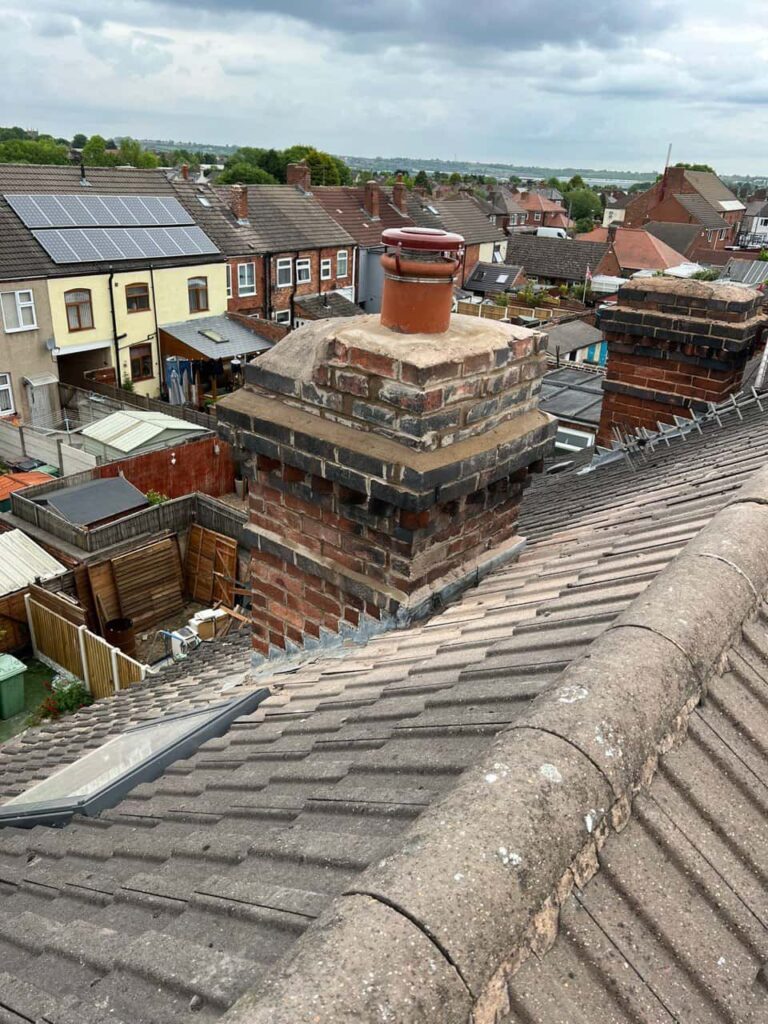
When considering a new roof or evaluating the structure of your existing property, understanding different roof types is essential. One design that continues to stand out for both its durability and visual appeal is the hip roof. At Belper Roofing Repairs, we regularly work with homeowners across Belper, Derbyshire who are looking to improve both the performance and appearance of their roofs, and the hip roof is often a strong contender.
This guide explains what a hip roof is, how it works, and whether it may be the right choice for your property.
What Is a Hip Roof?
A hip roof is a style of roofing where all sides slope downwards towards the walls, typically at a consistent angle. Unlike a gable roof, which has vertical ends, a hip roof has no upright sides—every edge slopes downwards, forming a more compact and stable structure.
In most cases, a standard hip roof consists of four sloping sides that meet at a ridge or a single point, depending on the design.
Key Features of a Hip Roof
Hip roofs are recognised for several distinctive characteristics:
- Sloping sides on all four elevations
- A central ridge (in rectangular designs) or a peak (in square designs)
- Consistent pitch across all sides
- Eaves running around the entire perimeter
These features combine to create a roof that is both structurally sound and visually balanced.
Advantages of a Hip Roof
Many homeowners in Belper, Derbyshire choose hip roofs for their practical benefits as well as their appearance.
Excellent Stability
Because all sides slope inward, hip roofs are inherently more stable than many other roof types. This makes them particularly well-suited to areas exposed to wind and varying weather conditions.
Improved Weather Resistance
The design allows rainwater and debris to run off efficiently from all sides. This reduces the likelihood of water pooling, which can contribute to long-term damage if not properly managed.
Enhanced Durability
With fewer vertical surfaces and strong inward slopes, hip roofs tend to experience less stress over time. When installed and maintained correctly, they can provide long-lasting performance.
Attractive Appearance
Hip roofs offer a clean, symmetrical look that complements a wide range of property styles. Whether modern or traditional, this design often enhances kerb appeal.
Disadvantages to Consider
While hip roofs offer many advantages, it is important to understand potential drawbacks:
- More complex construction compared to simpler roof types
- Requires careful planning and skilled installation
- Slightly higher material usage due to additional slopes
This is where working with experienced professionals such as Belper Roofing Repairs becomes essential to ensure quality workmanship.
Types of Hip Roofs
There are several variations of hip roofs, each suited to different property layouts:
Simple Hip Roof
The most common design, featuring four equal slopes that meet at a ridge.
Pyramid Hip Roof
Typically used on square buildings, where all sides meet at a central point.
Half-Hip Roof
Also known as a clipped gable, this design combines elements of both hip and gable roofs.
Cross Hip Roof
Common on larger properties, this involves two hip roof sections intersecting at right angles.
Choosing the right type depends on your property’s structure and your overall goals for the roof.
Is a Hip Roof Right for Your Property?
A hip roof can be an excellent option if you are looking for:
- Increased structural stability
- Improved weather performance
- A refined and balanced appearance
However, every property is different. Factors such as existing roof structure, ventilation requirements, and long-term maintenance should all be considered.
At Belper Roofing Repairs, we take a tailored approach for homeowners in Belper, Derbyshire, ensuring that any roofing solution is appropriate for the property and built to last.
Maintenance Considerations
Like any roofing system, a hip roof requires regular inspection and upkeep. Key areas to monitor include:
- Ridge lines and joints
- Tiles or slates on sloping sections
- Guttering and drainage around all sides
Routine maintenance helps prevent minor issues from developing into more significant problems.
Conclusion
A hip roof is a reliable, attractive, and durable roofing option that offers excellent performance in a range of conditions. Its all-sided slope provides enhanced stability and efficient water runoff, making it a practical choice for many homes in Belper, Derbyshire.
If you are considering a new roof, repairs, or simply want expert advice on your existing structure, Belper Roofing Repairs is here to help. Our team is committed to delivering high-quality roofing solutions tailored to your property.
Get in touch today to discuss your requirements and take the next step towards a roof that performs as well as it looks.
Call us on: 01773 303 690
Click here to find out more about Belper Roofing Repairs
Click here to complete our contact form and see how we can help with your roofing needs.